Stomach Ulcer: Symptoms, Causes and Treatment in Singapore
Seeing a burning or gnawing pain in your upper abdomen, especially between meals or at night? This is often a sign of a stomach ulcer, a common and treatable condition once diagnosed.

陈俊海医生
上消化道专科医生,双院士培训外科医生
MBBS (墨尔本),医学硕士(外科),FRCS(爱丁堡),FAMS(普通外科)
概述
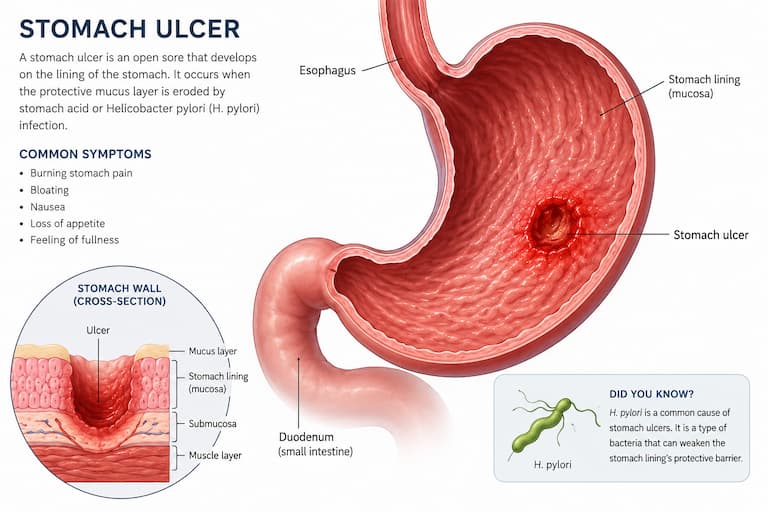
A stomach ulcer is an open sore in the lining of your stomach, caused by acid damaging its protective mucus layer. The two main causes are a bacterial infection (H. pylori) and long-term use of pain medicines like ibuprofen or aspirin. Most ulcers cause a burning pain in the upper abdomen and are treatable with antibiotics and acid-reducing medication. Seek urgent care for black stools or blood-like vomit.
目录
导言
What Is a Stomach Ulcer?

A stomach ulcer, also called a gastric ulcer, is an open sore that develops on the inner lining of your stomach. It happens when your stomach’s protective mucus layer breaks down, allowing acid to erode the tissue underneath.
Stomach ulcers belong to a broader group of conditions known as peptic ulcer disease, which also includes duodenal ulcers, sores that form just past the stomach in the first part of the small intestine.
Ulcers are common and, in most cases, very treatable once identified. What matters is catching them early, because an ulcer left untreated can bleed, deepen, or in rare cases lead to more serious complications. If you’re reading this because of ongoing stomach pain, take some reassurance: most patients recover fully with the right treatment. The next few sections will help you understand what to look out for and what your options are.

Symptoms of a Stomach Ulcer

The most recognisable symptom is a burning or gnawing pain in the upper abdomen, roughly between your breastbone and navel. This pain often comes and goes rather than staying constant, and it may flare when your stomach is empty, such as between meals or at night.
Other common symptoms include:
- Bloating or a feeling of fullness after small meals
- Nausea or occasional vomiting
- 食欲不振
- Indigestion or discomfort that worsens with certain foods
- Unintentional weight loss over time
Not everyone with a stomach ulcer experiences noticeable symptoms. Some ulcers are only discovered during a gastroscopy performed for another reason, which is one reason persistent, unexplained digestive discomfort is worth investigating rather than managing indefinitely with over-the-counter antacids.
When Symptoms Need Urgent Attention

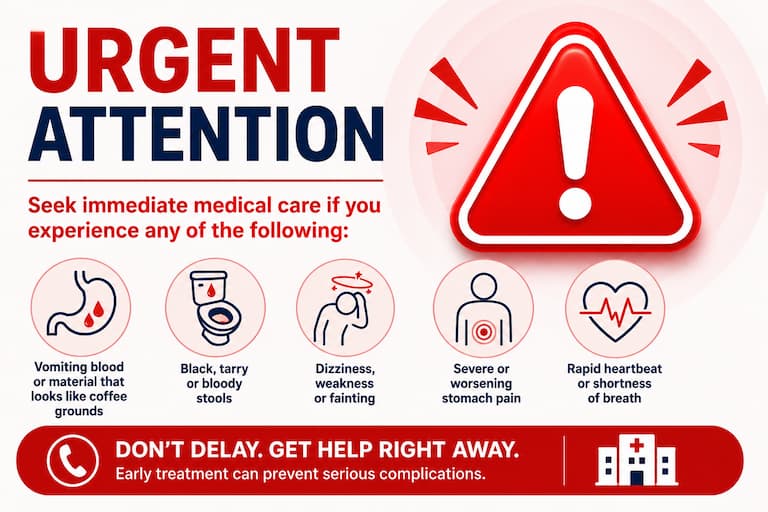
- Black or tarry stools
- Vomiting blood, or vomit that looks like coffee grounds
- Sudden, severe abdominal pain
- Feeling faint, dizzy or unusually short of breath alongside stomach pain
These can be signs of a bleeding or perforated ulcer, which requires prompt treatment.
If any of these apply to you, please contact us directly or head to the nearest emergency department. For everything else described on this page, an appointment with a specialist is the appropriate next step.

What Causes a Stomach Ulcer?
Two causes account for most stomach ulcers.

H. pylori Infection
This common bacterium settles into the mucus layer of the stomach and weakens its ability to protect against acid. Over time, this allows the acid to damage the tissue underneath. You can read more about how this infection develops and spreads on our H. pylori infection page.
Long-Term Use of NSAIDs
Painkillers such as ibuprofen, aspirin and other non-steroidal anti-inflammatory drugs can irritate and thin the stomach lining when used regularly over weeks or months, particularly in older adults or those on multiple medications.
Less commonly, ulcers can be linked to smoking, heavy alcohol use, or, rarely, other underlying medical conditions. Contrary to popular belief, stress and spicy food do not directly cause ulcers, though they can make existing symptoms feel worse.

Stomach Ulcer vs Gastritis vs GERD
Because these three conditions share overlapping symptoms, it’s common to be unsure which one you’re dealing with. Here’s a general comparison:
| 胃溃疡 | Gastritis | GERD (Acid Reflux) | |
|---|---|---|---|
| What it is | An open sore in the stomach lining | General inflammation of the stomach lining | Stomach acid flowing back into the 食道 |
| Typical pain | Burning or gnawing, often worse on empty 胃 | Burning discomfort, nausea, fullness | Heartburn, chest burning, sour taste |
| Common cause | 幽门螺杆菌, NSAIDs | 幽门螺杆菌, NSAIDs, alcohol | Weak lower oesophageal muscle, diet, weight |
| How it’s confirmed | 胃镜检查 | 胃镜检查 | Symptoms, sometimes gastroscopy |
注: symptoms alone are not a reliable way to tell these conditions apart. A gastroscopy is the most accurate way to confirm which one you have. If your symptoms sound more like reflux than an ulcer, our GERD page covers that condition in more depth.
诊断
How Is a Stomach Ulcer Diagnosed?
The most reliable way to confirm a stomach ulcer is a 胃镜检查, a procedure where a thin, flexible camera is passed through the mouth to examine the stomach lining directly. This allows your doctor to see the ulcer, assess its size and severity, and take a small tissue sample if needed to check for H. pylori or rule out other causes.
Alongside or instead of a gastroscopy, your doctor may also use a urea breath test, stool antigen test, or blood test to check specifically for H. pylori infection,
since confirming the underlying cause shapes the treatment plan.
Consultation with a specialist is the first step. Your doctor will review your symptoms and medical history before recommending which of these tests is appropriate for you.
Treatment for Stomach Ulcers
Treatment depends on what’s causing the ulcer.
If 幽门螺杆菌 is confirmed, treatment usually involves a combination of antibiotics to eliminate the bacteria and a proton pump inhibitor (PPI) to reduce stomach acid and allow the ulcer to heal. This course typically runs for one to two weeks, and completing it fully is important, since stopping early can allow the infection to persist or become harder to treat.
If NSAID use is the cause, your doctor will usually recommend stopping or reducing the medication where possible, alongside acid-suppressing treatment to let the lining recover.
Most patients see meaningful improvement within a few weeks of starting treatment. A follow-up test, such as a repeat breath test or gastroscopy, may be recommended to confirm the ulcer has healed and any infection has cleared.
In rare cases where an ulcer is bleeding or has caused a perforation, treatment during the gastroscopy itself, or occasionally surgery, may be needed. This is uncommon and your doctor will explain if it applies to your situation.
Can a Stomach Ulcer Heal on Its Own?
A small number of mild ulcers may improve slightly with lifestyle changes alone, but this isn’t something to rely on. Without treating the underlying cause, whether that’s H. pylori or ongoing NSAID use, an ulcer is likely to persist or return.
Left unaddressed, it can also lead to complications such as bleeding, perforation, or, in chronic untreated cases, an increased risk of 胃癌. Getting a proper diagnosis gives you a clear answer instead of guessing.
Living With and Preventing Stomach Ulcers
While diet doesn’t cause ulcers, some simple habits can support healing and reduce discomfort:
- Avoid or reduce NSAID painkillers where possible, and check with your doctor about alternatives if you take them regularly
- Limit alcohol and avoid smoking, both of which can slow healing
- Eat regular, smaller meals rather than large ones, and notice if specific foods worsen your symptoms
- Complete the full course of any prescribed antibiotics, even once you start feeling better

A Word of Reassurance
Stomach ulcers are one of the more common conditions our gastro specialist sees, and the large majority of patients recover well with proper diagnosis and a complete course of treatment. If your symptoms match what’s described here, the most useful next step is a consultation, not a search engine
有消化系统健康问题?
请将您的询问发送给我们,或致电 6250 5610
对于下班后的紧急情况,请给我们发送 通过 WhatsApp 发短信 > 前往鹰格急诊中心,请求找 Tan Chun Hai 医生
我们的诊所 纳皮尔路 6A 号, 鹰阁医院附楼, #05-36A, 新加坡 258500

常见问题
Most people describe a burning or gnawing pain in the upper abdomen, sometimes accompanied by bloating or nausea. The pain often worsens when the stomach is empty and may ease temporarily after eating.
The two leading causes are H. pylori infection and long-term use of NSAID painkillers. Less commonly, smoking, heavy alcohol use or other medical conditions can contribute.
Gastritis is general inflammation of the stomach lining, while an ulcer is a specific open sore. They share similar symptoms and causes, so a 胃镜检查 is usually needed to tell them apart.
A gastroscopy is the most reliable method, allowing your doctor to view the stomach lining directly and take a biopsy if needed. Tests for 幽门螺杆菌, such as a breath, stool or blood test, may also be used
It’s unlikely to resolve fully without addressing the underlying cause. Treating the infection or stopping the triggering medication is usually necessary for the ulcer to heal properly.
Seek immediate care if you notice black or tarry stools, vomiting blood or coffee-ground-like vomit, 或 sudden severe abdominal pain, as these may indicate bleeding or a perforated ulcer.
Cost varies depending on whether medication alone is needed or a gastroscopy is required for diagnosis. Gastroscopy fees generally range based on MOH benchmarks; please contact our clinic for a personalised estimate.
Gastroscopy and related procedures with a recognised TOSP code are typically eligible for Medisave or insurance subsidy, subject to pre-authorisation. Our team can assist with this process.