Stomach Polyps: Symptoms, Causes and Treatment Options

陈俊海医生
上消化道专科医生,双院士培训外科医生
MBBS (墨尔本),医学硕士(外科),FRCS(爱丁堡),FAMS(普通外科)
目录
导言
What Are Stomach Polyps

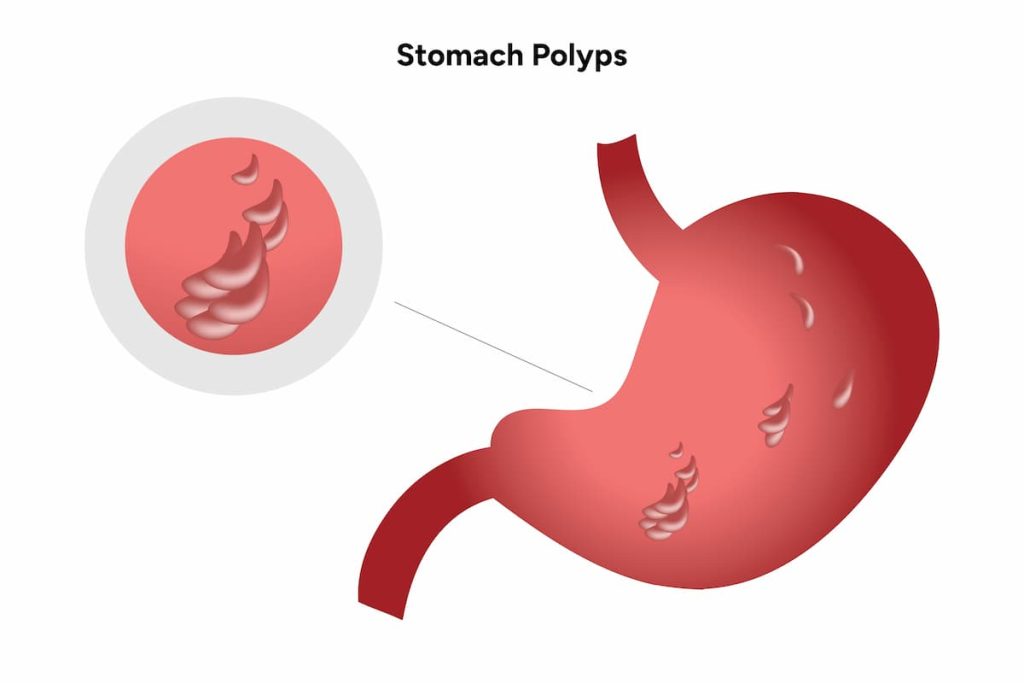
A stomach polyp is a small growth of tissue that forms on the inner lining of the stomach, also called the gastric mucosa. Most are only a few millimetres across, and many people carry one without ever knowing it.
Stomach polyps are common, and the vast majority are benign. They’re usually found by chance, during an endoscopy performed for an unrelated reason such as reflux, indigestion or a routine health screening. Being told you have one can still feel unsettling, especially if you weren’t expecting the finding.
The good news is that not every polyp needs treatment. What matters is understanding which type you have, because that determines whether it simply needs watching or whether removal is the safer path.
If you’ve recently received this kind of finding, the next step is a proper assessment by a gastrointestinal surgeon who can explain what it means for you specifically.

胆囊息肉的症状

Most stomach polyps cause no symptoms at all. This is one of the main reasons they’re usually discovered incidentally rather than because a patient noticed something wrong.
When a polyp does grow large enough to cause symptoms, these can include:
- A vague ache or discomfort in the upper abdomen, sometimes worse after meals
- Nausea or a feeling of indigestion
- Bloating
- Blood in the stool, or stools that look dark and tarry
- Unexplained tiredness linked to low iron levels, if a polyp has been bleeding slowly over time
注: Because symptoms are so often absent, a stomach polyp finding on your endoscopy report doesn’t necessarily mean anything is currently wrong. It does mean the finding is worth having properly assessed, particularly to rule out the less common polyp types that carry higher risk.
Types of Stomach Polyps and Cancer Risk
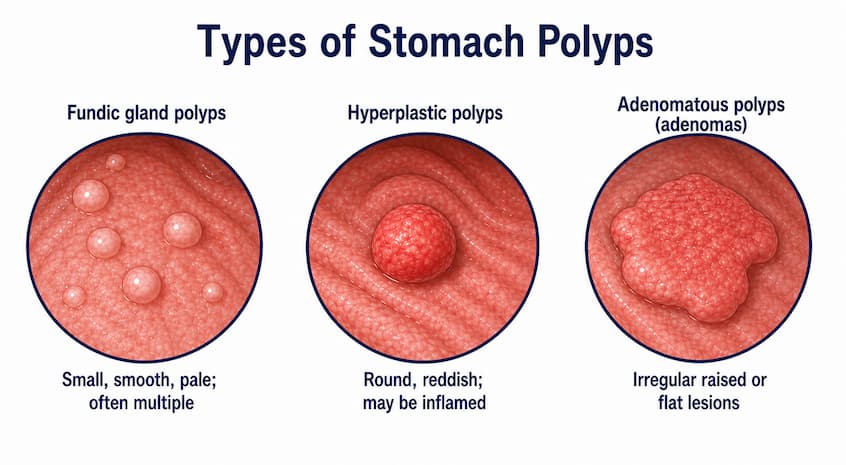
Not all stomach polyps behave the same way and this is usually the most important thing to understand after a diagnosis. The type of polyp determines both the likely cause and the recommended treatment.
| Polyp type | How common | Cancer risk | Typical cause |
|---|---|---|---|
| Fundic gland polyps | Most common | Low, though larger ones (over 1cm) carry a small increased risk | Long-term use of proton pump inhibitors (PPIs) or familial adenomatous polyposis in rarer cases |
| Hyperplastic polyps | 常用 | Low overall, though risk rises with size over 1cm | Chronic inflammation, often linked to Helicobacter pylori infection or gastritis |
| Adenomatous polyps (adenomas) | Least common | Highest of the common types | Often associated with chronic gastritis or inherited polyposis syndromes |
| Hamartomatous polyps | Uncommon | Usually low, but can be associated with certain hereditary syndromes | Often linked to a genetic condition |

Adenomas are the type most likely to progress toward stomach cancer if left untreated, which is why they’re generally removed regardless of size. Fundic gland and hyperplastic polyps, by contrast, are frequently left alone if they’re small and show no concerning features on biopsy. Your specialist won’t be able to tell you the exact type just by looking at it during endoscopy. A biopsy, where a small tissue sample is taken and examined in a lab, is what confirms the diagnosis and guides the treatment decision.

What Causes Stomach Polyps
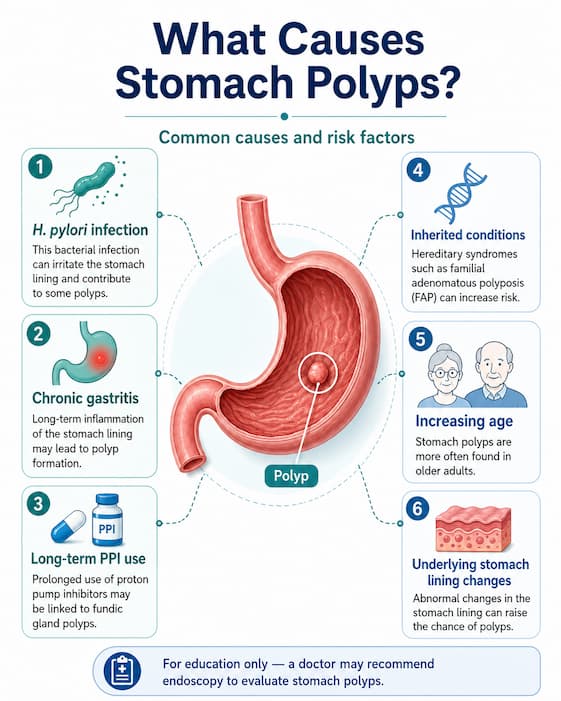
Stomach polyps tend to develop after the stomach lining has been irritated or altered in some way. Common contributing factors include:
- Long-term use of proton pump inhibitors (PPIs), medications commonly prescribed for acid reflux or GERD, which are strongly linked to fundic gland polyps
- Chronic gastritis, ongoing inflammation of the stomach lining
- Helicobacter pylori infection, a bacterial infection affecting a significant proportion of Singaporeans, many of whom are unaware they carry it
- Age, as polyps become more common from mid-adulthood onward
- Familial adenomatous polyposis (FAP), a rare inherited condition that causes multiple polyps to form throughout the digestive tract

Identifying the underlying cause matters because treating it, such as stopping an unnecessary PPI or clearing an H. pylori infection, can sometimes resolve the polyps without any further procedure being needed.
How Stomach Polyps Are Diagnosed
If a polyp is seen during the procedure, your specialist will usually:
- Take a biopsy, removing a small tissue sample for laboratory analysis
- Note the polyp’s size, shape, location and number
- Remove it immediately if it looks suspicious or falls within the size range typically recommended for removal

In some cases, especially where there are multiple polyps or a family history of polyposis syndromes, your doctor may also recommend genetic counselling or additional screening of other parts of the digestive tract.


Stomach Polyps Treatment Options
Treatment isn’t one-size-fits-all. It depends on the polyp’s type, size, number and whether it’s linked to an underlying condition.
For small, low-risk polyps:
The usual approach is monitoring, meaning periodic endoscopy to check for growth or change, rather than immediate removal.
For polyps that need treatment:
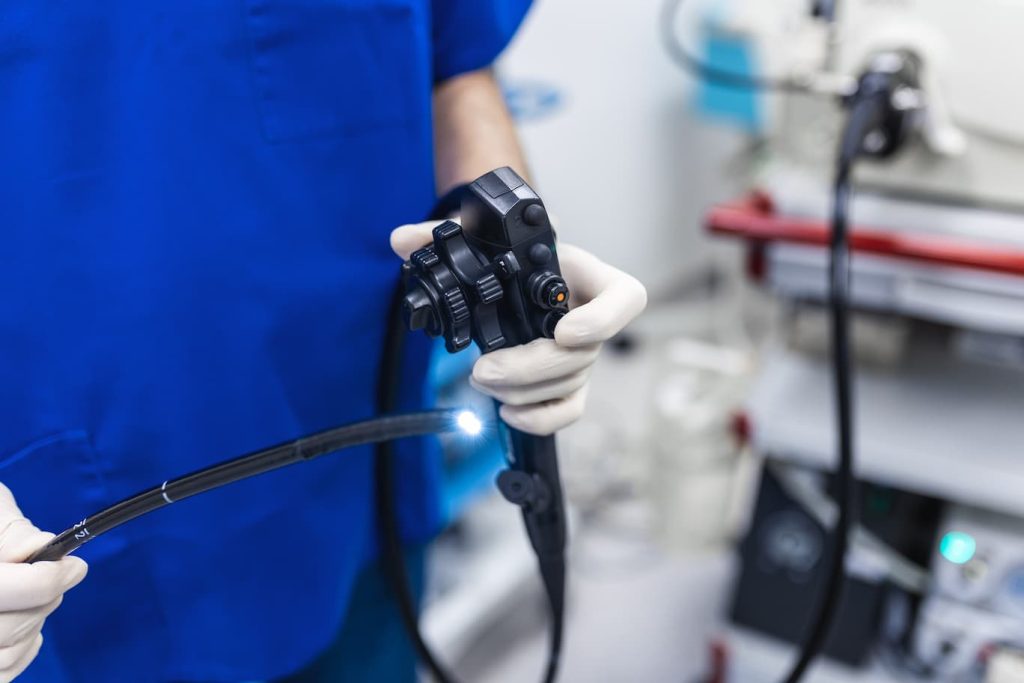
- Endoscopic polypectomy is the most common approach. The polyp is removed during endoscopy using a snare or cautery device, without any external incision.
- Treating the underlying cause, such as switching or stopping a PPI or treating an H. pylori infection with antibiotics, can help prevent new polyps from forming.
- Follow-up endoscopy is often recommended after treatment to confirm the area has healed and to check for any new growths.
Surgery is rarely required and is generally only considered when:
- The polyp is too large or too deep in the stomach wall to remove safely by endoscope
- The biopsy shows features that suggest a higher likelihood of cancer
- Multiple polyps are present as part of a genetic syndrome

Where surgery is needed, it’s usually performed laparoscopically (keyhole), which involves smaller incisions, less post-operative pain and a faster return to normal activity compared with open surgery.
何时应就诊专科医生
You should arrange a review with a specialist if any of the following apply:
- You’ve been told a polyp was found during an endoscopy, but haven’t yet discussed what type it is
- Your polyp is larger than 1cm
- A biopsy has shown dysplasia or other concerning features
- You have multiple polyps or a family history of polyposis syndromes
- You’re experiencing symptoms such as abdominal pain, unexplained bleeding or persistent nausea
A specialist can explain what your specific finding means, assess your overall risk and recommend whether ongoing monitoring or treatment is the more appropriate path. This is especially useful if the polyp was picked up incidentally and you’re unsure what your report actually means for you. 6.
有消化系统健康问题?
请将您的询问发送给我们,或致电 6250 5610
对于下班后的紧急情况,请给我们发送 通过 WhatsApp 发短信 > 前往鹰格急诊中心,请求找 Tan Chun Hai 医生
我们的诊所 纳皮尔路 6A 号, 鹰阁医院附楼, #05-36A, 新加坡 258500
Recovery After Polyp Removal
Recovery from an endoscopic polypectomy is generally straightforward and most patients go home the same day.
You may be advised to:
- Avoid strenuous activity for 24 to 48 hours
- Eat lighter meals initially if your digestion feels sensitive
- Watch for signs of bleeding, which can occasionally occur up to a week or two after the procedure
- Attend your scheduled follow-up endoscopy, if recommended

Note: In the rare cases where surgery is needed, recovery takes longer and will be explained fully by your surgeon based on the specific procedure performed.

20 多年的临床专业知识
陈俊海医生
上消化道、减肥和普通外科医生
内窥镜与微创外科专家
陈春海医生是一位上消化道专科医生,拥有 双轨专科医师培训 在腹腔镜(微创)胃癌手术和减重手术中。.
他在国际知名的胃肠科接受了微创手术的双重专科培训,包括 首尔国立大学盆唐医院 在韩国以及 民生医院 在台湾。.
谭医生擅长治疗多种消化系统疾病,包括胆结石、胃癌、阑尾炎和慢性胃食管反流病。.
他根据具体情况进行内镜检查和微创手术,并根据每位患者的病情和需求量身定制治疗方案。.
谭医生以沉着稳重、令人安心的诊疗风格著称,确保每位患者在整个治疗过程中都能充分了解情况并获得支持。.
对于符合条件的案例,, 治疗可安排在当天进行, ,通常在确诊后的几小时内。.