
Are you the type of person who feels bloated and uncomfortably full after every meal, even with regular food portions? And you find yourself needing a hot cup of tea to boot?
You are not alone. Singapore’s diverse and flavourful food culture makes occasional overindulgence almost unavoidable. While bloating now and then is normal, feeling bloated after every meal may point to digestive triggers that should not be ignored.
What does bloating feel like?
Bloating occurs when your abdomen feels unusually full, tight, or swollen, sometimes described as feeling like a balloon. Your stomach may feel heavy, stretched, or appear visibly larger than usual.
Common sensations include pressure, gurgling, trapped gas, discomfort, or a persistent sense of fullness, even when you have not eaten a large meal.
Bloating is different from normal post-meal fullness. While it is natural to feel satisfied after eating, you should not always feel uncomfortable or distressed.
As a general rule, persistent discomfort after meals may suggest gas buildup, slowed digestion, or an underlying digestive issue rather than simple fullness.
In rare cases, persistent bloating, especially when associated with early satiety, unexplained weight loss, or ongoing abdominal discomfort, may warrant further evaluation to rule out more serious conditions such as gastric cancer.
Common reasons you feel bloated after eating
Eating Too Quickly
Swallowing food too fast can trap air in your stomach, increasing gas and bloating. Chewing thoroughly and eating slowly can significantly reduce discomfort.
Overeating or Large Portions
Eating large meals stretches the stomach and slows digestion, leading to that “bloated” sensation. Smaller, more frequent meals can help.
High-Fat or High-Sodium Meals
Fat slows gastric emptying, while excess salt can cause water retention, both contributing to bloating. In some cases, bloating after meals, particularly following fatty foods, may also be linked to gallstones or other gallbladder conditions, which can affect normal bile release during digestion.
Carbonated Drinks
Soda, sparkling water, and other fizzy drinks introduce excess gas into the digestive tract, which can make you feel bloated.
Fibre Intake Issues
Too little fibre can lead to constipation, while suddenly increasing fibre (especially from beans, lentils, or certain vegetables) can cause gas and bloating as your gut adjusts.
For some people, simple lifestyle changes based on the factors above may significantly reduce bloating. However, for others, persistent symptoms may point to underlying digestive conditions that require professional evaluation.
Some common conditions include:
| Condition | Description |
|---|---|
| Irritable Bowel Syndrome (IBS) | Bloating is commonly associated with abdominal cramps, constipation, diarrhoea, or alternating bowel habits. |
| Small Intestinal Bacterial Overgrowth (SIBO) | An excess of bacteria in the small intestine can ferment food prematurely, leading to increased gas and bloating. |
| Delayed Gastric Emptying | When food remains in the stomach for longer than normal, it can cause persistent fullness, pressure, and bloating. |
| Digestive Enzyme Deficiencies | Insufficient digestive enzymes may impair food breakdown, resulting in gas production and bloating. |
If symptoms persist, your specialist may recommend further investigations, including gastroscopy to investigate bloating, where clinically appropriate.
Food and other lifestyle factors that can trigger bloating
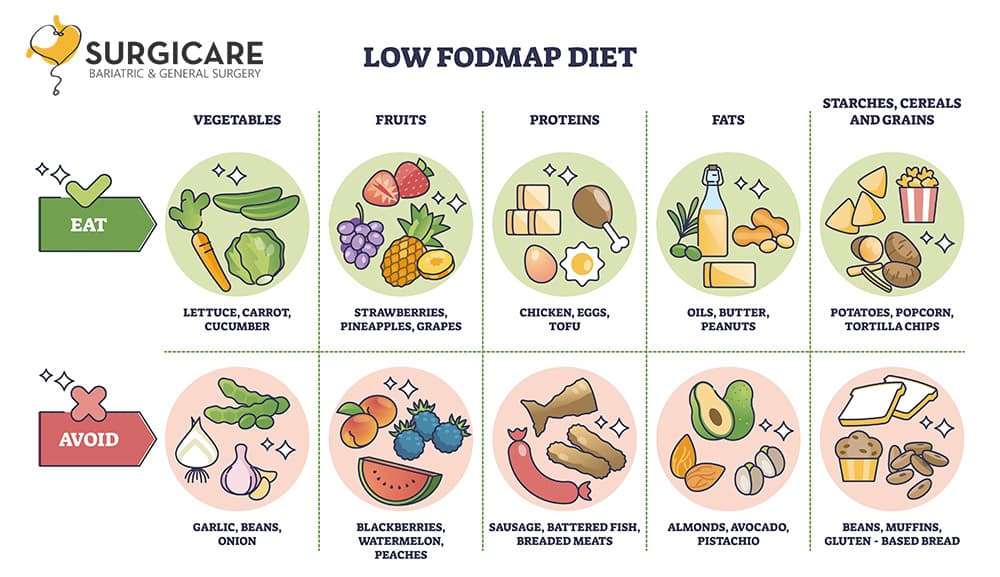
Certain foods may trigger bloating even if you otherwise eat a balanced diet. The most common bloat-inducing foods are lactose, gluten, FODMAP foods (e.g. garlic, onions, beans, apples) and artificial sweeteners often found in Diet Coke or Pepsi.
Other lifestyle factors that play a role in post-meal bloating include stress and anxiety (which can slow digestion), a sedentary lifestyle (prolonged sitting may reduce bowel activity and trap gas), and poor sleep (which can disrupt hormonal balance and affect digestion).
How do I know if I am gluten sensitive or lactose intolerant?
You may be lactose intolerant if you often notice:
- Bloating, gas, or cramps after having milk, cheese, ice cream, or other dairy products
- Loose stools or diarrhoea
- Feeling nauseous after dairy consumption
Gluten sensitivity is a little trickier, but common signs include:
- Bloating, stomach discomfort, or cramps after eating bread, pasta, pastries, or wheat-based foods
- Diarrhoea or constipation
- Feeling unusually tired or “foggy” after meals
- Noticing that you feel better when you avoid gluten
The best way to know is to seek confirmation from a specialist, who may recommend tests such as a lactose intolerance test, hydrogen breath test, or blood tests for coeliac disease.
Keeping a simple food diary beforehand can also be helpful in identifying patterns that trigger your symptoms.
Can probiotics reduce bloating?
Probiotics are beneficial bacteria that work by improving digestion and supporting a healthy gut microbiome. For some people, they can help reduce bloating caused by gas-producing foods, IBS, or bacterial imbalances.
However, probiotics are not a guaranteed cure for bloating. They are a supplement, which means they should complement existing treatments and lifestyle adjustments. Before starting probiotics or any supplements in general, consult a healthcare provider first.
Key Takeaway: When Should You Be Concerned About Bloating?
Occasional bloating is common and often related to diet or eating habits. However, bloating should not be persistent, severe, or disruptive to daily life.
You should seek medical attention if bloating is ongoing or if it is accompanied by warning signs such as abdominal pain, vomiting, blood in the stools or unintended weight loss.
Persistent symptoms may indicate an underlying upper digestive condition that requires further assessment rather than simple lifestyle adjustments.

At Surgicare, we focus on the evaluation and management of stomach and upper gastrointestinal conditions that may contribute to ongoing bloating and discomfort.
Under the care of our specialist, patients receive structured assessment and appropriate investigations to help identify the cause and guide treatment.
Call our clinic at +65 6250 5610 or WhatsApp us for an appointment.