
Gallbladder Sludge: Symptoms, Causes and Treatment Options
Overview
Gallbladder sludge (also called biliary sludge) is thickened bile containing cholesterol crystals, calcium salts and other particles. It is usually found on ultrasound and often causes no symptoms. It may clear on its own, stay unchanged or progress to gallstones. Management ranges from monitoring and lifestyle changes to keyhole gallbladder removal if symptoms persist or complications develop.

Dr. Tan Chun Hai
Upper Gastrointestinal Specialist, Dual Fellowship Trained Surgeon
MBBS (Melbourne), Masters of Medicine (Surgery), FRCS (Edinburgh), FAMS (General Surgery)
Table of Content
- What Is Gallbladder Sludge?
- Gallbladder Sludge Symptoms
- What Causes Gallbladder Sludge?
- Is Gallbladder Sludge Serious?
- Sludge, Gallstones and Polyps: What Is the Difference?
- How Is Gallbladder Sludge Diagnosed?
- Gallbladder Sludge Treatment Options
- What to Expect at Your Consultation
- Speak to a Gallbladder Specialist
- Frequently Asked Questions
- References
Introduction
What Is Gallbladder Sludge?
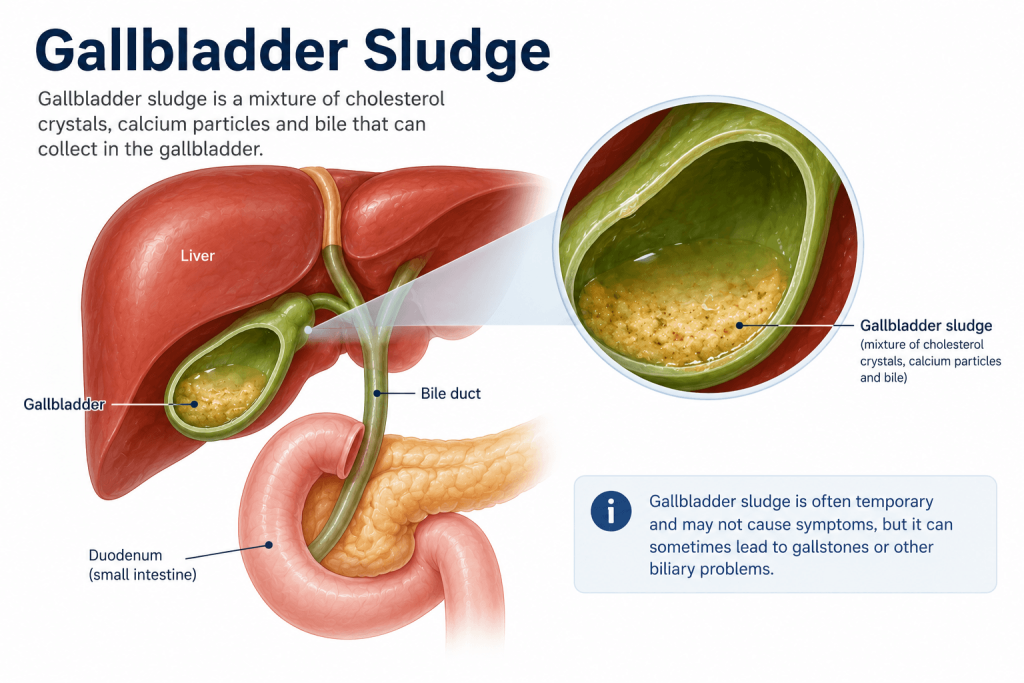
The gallbladder is a small pouch under the liver that stores bile, a fluid that helps your body digest fat. When bile sits in the gallbladder for too long, it can thicken. Cholesterol crystals, calcium salts, bilirubin and mucus can then clump into a fine, gritty material known as sludge.
On ultrasound, sludge appears as layered echoes at the bottom of the gallbladder that shift when you change position. It is not the same as a stone, but the two are related. Sludge can be an early step on the path to gallstones in some people.
Note: Gallbladder sludge is often an incidental finding. Many people learn about it during a scan done for another reason.
Gallbladder Sludge Symptoms
Most people with sludge have no symptoms at all. When symptoms do appear, they tend to resemble those of gallstones.
Common signs
- Pain in the upper right or upper middle abdomen, often after a fatty meal
- Pain that spreads to the right shoulder or back
- Nausea or vomiting
- Bloating or indigestion
These episodes may come and go, which is why the cause can be missed for months.

When symptoms need urgent care
Urgent symptoms: Seek medical care promptly if you have severe upper abdominal pain that does not ease within a few hours, fever or chills with abdominal pain, yellowing of the skin or eyes (jaundice), tea-coloured urine or pale stools. These can signal inflammation, infection or a blocked bile duct.
What Causes Gallbladder Sludge?

Sludge forms when bile stays in the gallbladder longer than usual or contains more cholesterol or bilirubin than it can hold in solution. Common triggers include:
- Rapid weight loss, including crash diets and the months after weight loss surgery
- Prolonged fasting or being fed through a vein (total parenteral nutrition) during illness
- Pregnancy, when hormones slow gallbladder emptying
- Certain medications, such as the antibiotic ceftriaxone and the drug octreotide
- Serious illness, major surgery or organ transplant
- High blood cholesterol, obesity or liver disease
Note: Sludge is not a sign that you did something wrong. It often appears when eating patterns change or the body is under stress.
Sludge, Gallstones and Polyps: What Is the Difference?
These three findings are often confused because they appear on the same scan.
Gallbladder sludge
Gallbladder sludge is thickened bile with fine particles. On ultrasound it layers at the bottom of the gallbladder and shifts with position. It often causes no symptoms and the usual first step is to monitor it and address the cause.
Gallstones
Gallstones are hard deposits formed from cholesterol or pigment. They also move with position, but they cast a shadow on ultrasound, which helps doctors tell them apart from sludge. When gallstones cause symptoms, biliary colic is common and surgery is often advised.
Gallbladder polyps
Gallbladder polyps are growths on the gallbladder wall. They usually stay fixed to the wall and cause no symptoms. Management depends on size and may involve monitoring or surgery.
How Is Gallbladder Sludge Diagnosed?
An abdominal ultrasound is the usual first test. It is painless and uses no radiation. If you have symptoms, your doctor may add blood tests to check liver function and pancreatic enzymes.
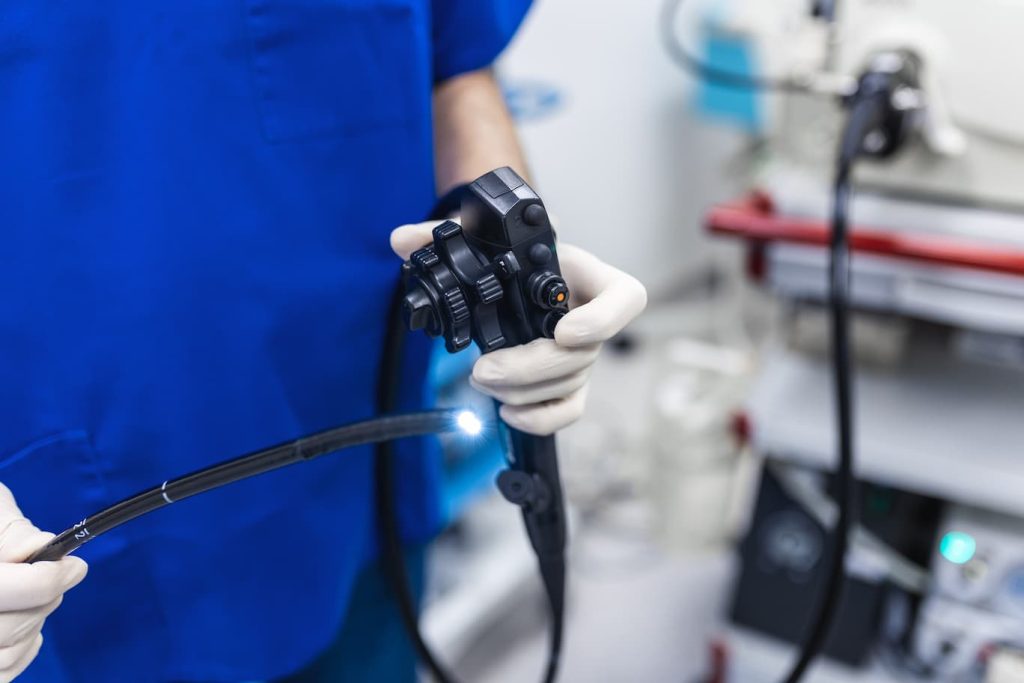
When the cause of pain is unclear, an MRCP (a type of MRI scan of the bile ducts) or an endoscopic ultrasound can look more closely for tiny stones that sludge may hide. A repeat ultrasound is often used to see whether the sludge persists.
Gallbladder Sludge Treatment Options
Not every case needs treatment. The right approach depends on your symptoms, your risk factors and whether complications have occurred.
| Approach | Often considered when | What it involves |
|---|---|---|
| Monitoring | No symptoms; sludge found by chance | Follow-up ultrasound and symptom review |
| Diet and lifestyle | Any stage, especially with weight loss or fasting | Regular meals and gradual weight change |
| Medication | Selected cases, such as rapid weight loss | Ursodeoxycholic acid to change bile composition |
| Keyhole surgery | Recurring symptoms or complications | Laparoscopic gallbladder removal |
Note: You do not need to decide alone or in a hurry. For most people with sludge, a specialist review is the first step and surgery is not the starting point.
Monitoring
If sludge causes no symptoms, doctors commonly recommend observation with a follow-up scan and clear guidance on warning signs.
Diet and lifestyle
Regular meals help the gallbladder empty, while prolonged fasting and crash diets can encourage sludge. A balanced, high-fibre diet with moderate fat and less fried food may ease symptoms for some people. No diet has been shown to dissolve established sludge, so treat food changes as support rather than a cure.
Medication
Ursodeoxycholic acid (UDCA) is a bile acid that may be considered in selected patients, for example during rapid weight loss. Evidence for clearing established sludge is limited and responses vary, so the decision is made case by case.
Keyhole gallbladder surgery
When symptoms keep returning or sludge has led to gallbladder inflammation or pancreatitis, removing the gallbladder is usually recommended. Laparoscopic cholecystectomy is done through small incisions using a camera. Bile continues to flow from the liver to the intestine afterwards and most people adjust well without a gallbladder. Read more in our guide to keyhole gallbladder surgery.
CONSULTATION
What to Expect at Your Consultation
Dr Tan Chun Hai will ask about your symptoms, recent weight changes, medications and pregnancy history. Dr Tan will review your scan and may arrange a repeat ultrasound or blood tests. You will then discuss whether monitoring or treatment suits you.
Please bring:
- Your ultrasound report and images if available
- A list of your current medications
- Any recent blood test results
Our team can also guide you on questions about insurance and Medisave.
Speak to a Gallbladder Specialist
A finding on a scan is easier to face once someone has explained it clearly. If you have symptoms or would like your report reviewed, our team is here to help you understand your options and plan next steps at your own pace.
Send us your enquiry or give us a call at 6250 5610
For emergencies after hours, send us a text via WhatsApp > head to Gleneagles Urgent Care Centre and request for Dr. Tan Chun Hai
Our Clinic: 6A Napier Road, Gleneagles Hospital Annexe Block, #05-36A, Singapore 258500

Frequently Asked Questions
Not usually. Many people have no symptoms and need only monitoring. It becomes more significant if it causes pain, inflammation or pancreatitis.
Yes, it can. It may resolve, come and go or progress to gallstones, so follow-up is advised.
No. Surgery is generally reserved for people with recurring symptoms or complications.
Diet supports gallbladder health but is not proven to dissolve sludge. Medication such as UDCA may help in selected cases. Your doctor will advise if it applies to you.
No. Sludge is thickened bile with fine particles, while gallstones are solid deposits. Sludge can sometimes lead to stones.
Occasionally. Sludge or tiny stones can block the pancreatic duct opening. Severe upper abdominal pain with vomiting needs urgent assessment.
Yes, most people do. Bile flows directly from the liver to the intestine. Some people notice looser stools for a period after surgery.
1. Hill, P. A., & Harris, R. D. (2016). Clinical importance and natural history of biliary sludge
in outpatients. Journal of Ultrasound in Medicine, 35(3), 517–525.
https://doi.org/10.7863/ultra.15.05026
2. Ko, C. W., Sekijima, J. H., & Lee, S. P. (1999). Biliary sludge. Annals of Internal Medicine,
130(4), 301–311. https://pubmed.ncbi.nlm.nih.gov/10068389/
3. Gotter, A. (2025, June 12). What is gallbladder sludge? Healthline.
https://www.healthline.com/health/gallbladder-sludge
4. Medical News Today. (n.d.). Gallbladder sludge: Symptoms, causes, and treatments.
https://www.medicalnewstoday.com/articles/320057